
Ultraviolet ray sterilization and its application field
Iwasaki Electric's “Ultraviolet ray sterilization system” is a very effective sterilization method which uses ultraviolet rays that work towards the DNA of the microorganism and inhibit microbial reproduction.
Now, Shifting To Ultraviolet Sterilization
In modern society, chemical substances are used in various fields but we can't imagine how much of those would affect the human body and environment. It is natural to think it's desirable not to use chemicals for sterilizing foods and containers from the long-term perspective of the future of humankind. Iwasaki Electric's “Ultraviolet ray sterilization system” is a very effective sterilization method which uses the ultraviolet rays that work towards the DNA of the microorganism and inhibit microbial reproduction.
Achieved Production of High Level Clean Products
“Ultraviolet ray sterilization system” can meet the needs for the era where a high hygiene level is required. For food and medical products manufacture, there is GMP (Good Manufacturing Practice) which is the hygiene standard in every step of the way such as facility, equipment, appliances, machinery, manufacturing processes, workers and finished products. Especially for food, the HACCP (Hazard Analysis Critical Control Point) which is a scientific management system is adopted from the raising of raw material of food, their production, manufacturing and processing, storage of the product, logistics, to final distribution to the customers. The ultraviolet ray sterilization supports these kinds of hygiene management with its compact size and is a very efficient sterilization method that doesn't require the secondary treatment.
Issues with alternative sterilization methods
Heat sterilization:
- Not suitable for heat-resistant bacteria
- May cause material changes in the object being sterilized
- High energy costs
- Requires a cooling process, facilitating bacterial adhesion

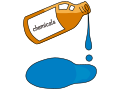
Chemical sterilization:
- Remnants require secondary treatment
- May lead to development of resistant bacteria
Ozone sterilization:
- Harmful to people
- Long processing times required at low concentrations
- Oxidation can lead to corrosion of metals
- Long processing time required against heat-resistant bacteria and fungi


Benefits of UV sterilization
Benefits 1
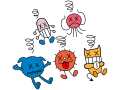
Effective against all types of bacteria
Benefits 2
Minimal risk of altering the physical properties of the object
Benefits 3
Compact device, and low maintenance costs

Benefits 4
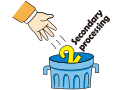
No secondary processing required, which simplifies the process, and reduces time and costs
Benefits 5
Can be sterilized at room temperature
Benefits 6
Does not create resistant bacteria

Ultraviolet ray sterilization and its application field
UV Power for Various Sterilization Fields
Manufacturer and process industry for the food, alcohol, drinking water

- Indoor sterilization
- Sterilization of containers, packaging materials, equipment: Glass bottles, caps, sheets, conveyor devices, etc.
- Sterilization of food before packaging, sterilization after packaging with transparent film
- Sterilization of raw material water: Water for brewery, food processing water, sugar solution, ice making water, etc.
- Sterilization of cleansing water: Cleansing of containers, raw material water, machines, etc.
- Sterilization of wastewater
- Sterilization and mold prevention of storage facilities.
Pharmaceutical and Cosmetics industry

- Sterilization of raw materials
- Sterilization of raw material water
- Sterilization of containers, packaging materials, equipment: Glass bottles, caps, sheets, conveyor devices, etc
- Sterilization of cleansing water
- Sterilization in the packaging room
- Sterilization before bringing into clean room
Electronics industry

- Photooxidation decomposition of trace organic substances in ultrapure water
- Sterilization at the front of RO membrane on ultrapure water production line
- Clean room sterilization
- Oxidative decomposition of organic matter in wastewater recovery system
Agriculture and fishery

- Sterilization of thawing water
- Sterilization of fish farming and cleansing water: Oysters with shells, seaweed, etc.
- Sterilization of hatching water: Eggs such as salmon, and fry
- Sterilization of fish farming wastewater
- Sterilization of nutrient solution in hydroponics system
Hospitals and research facilities

- Sterilization of medical experimental water: Sample dissolved water, test and analysis water, etc.
- Sterilization of medical cleansing water: Hand washing water before surgery, treatment room water, medical equipment cleansing water, etc.
- Sterilization of medical and research wastewater
- Sterilization of the medical transport boxes
Food shops, restaurants, hotel kitchens

- Sterilization in the storage area
- Sterilization in the kitchen area
- Sterilization of the kitchen counter
- Sterilization of cleansing water
Other

- Sterilization of drinking water: Ships, railway trains, vending machines, etc.
- Disinfection instead of chlorine in sewage
- Chlorine in tap water: Countermeasures against cryptosporidium etc.
- Emergency drinking water sterilization
- Sterilization and purification of pool and hot spring water
Contact
For UV sterilization solutions, trust Iwasaki Electric.
We develop custom solutions tailored to your needs.